Lonicera sempervirens
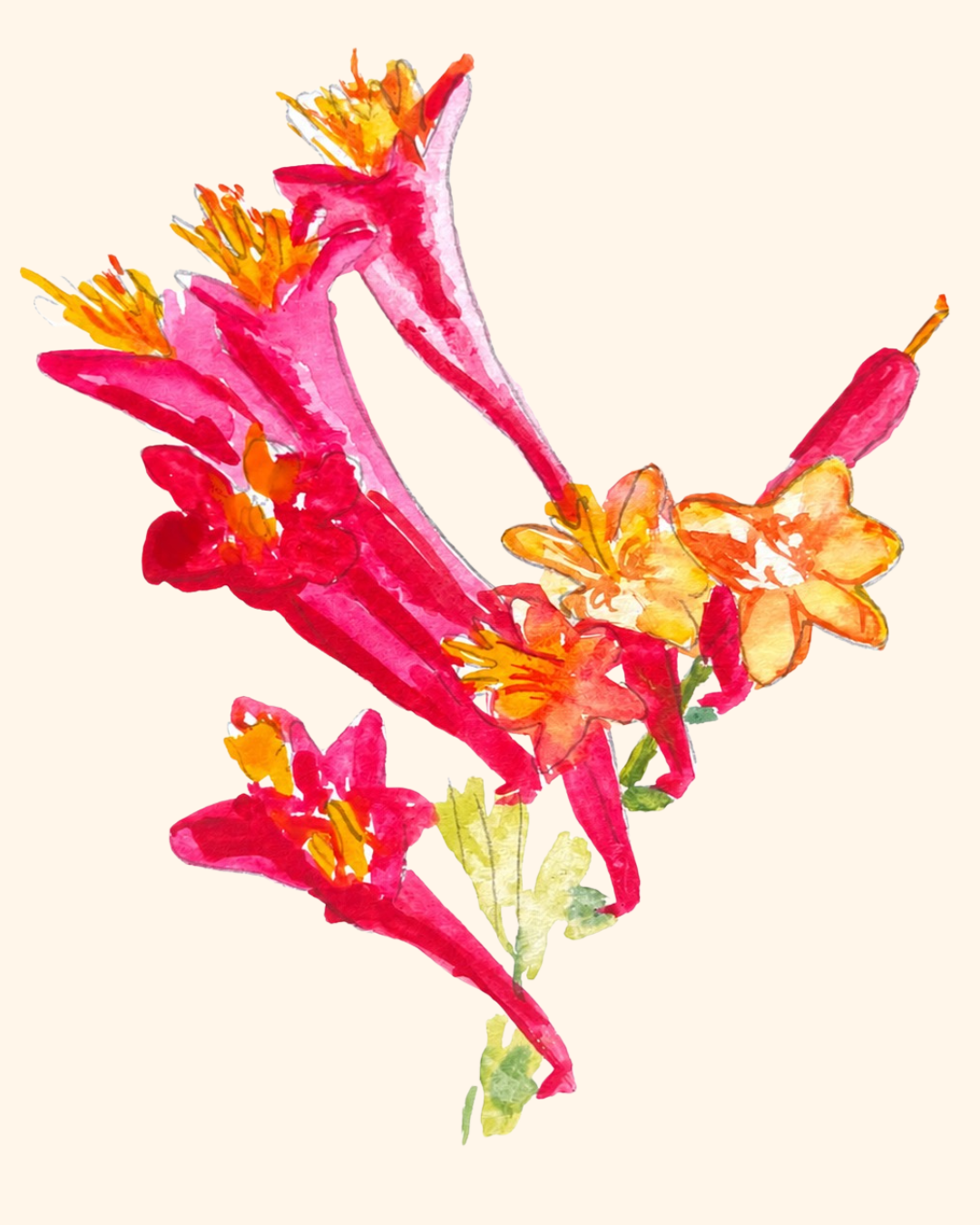
Trumpet Honeysuckle
‘Plants of Place’
A FIELD GUIDE
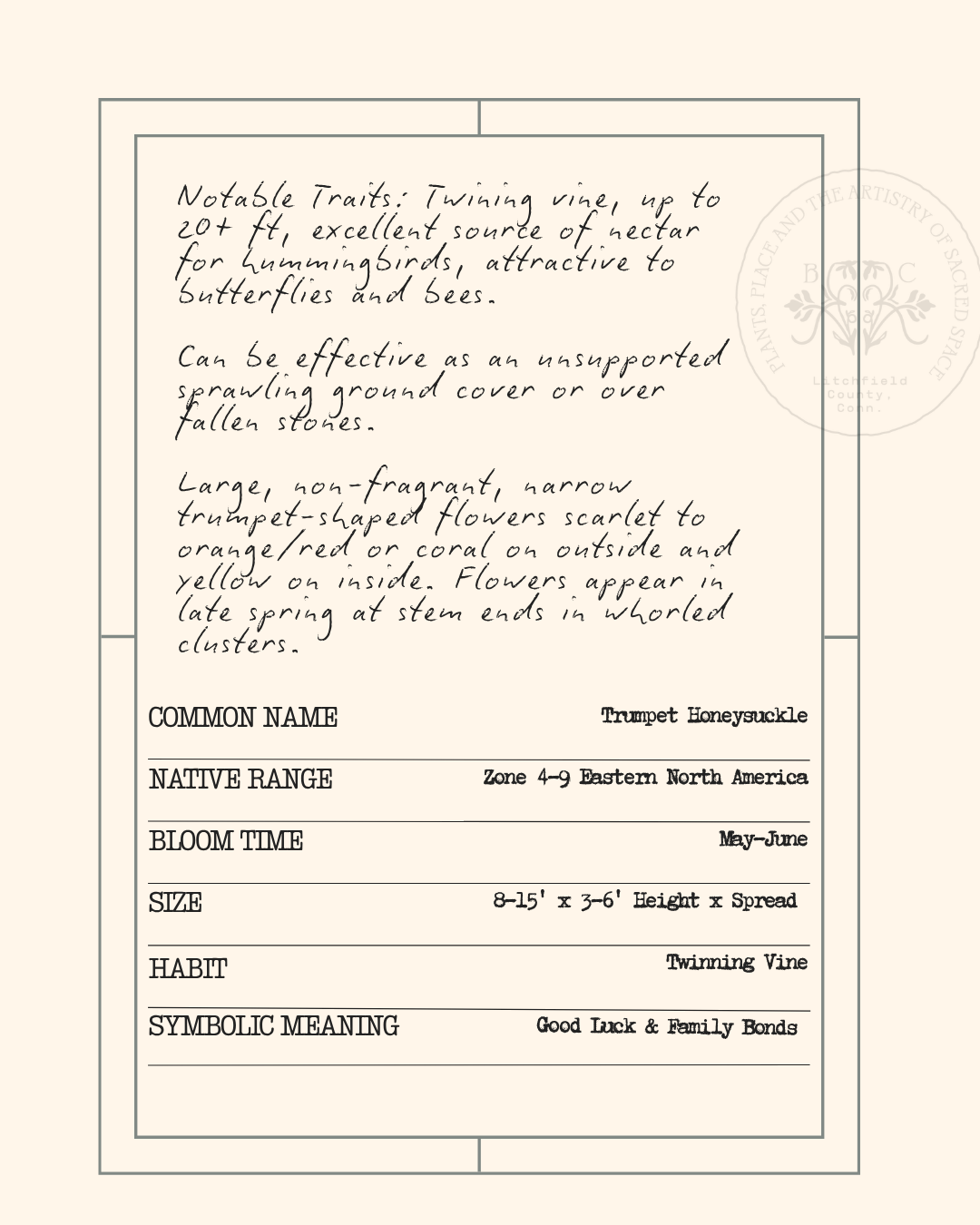
There’s something deeply generous about trumpet honeysuckle. It asks for very little, settles easily into the garden, and gives back constantly—bright clusters of scarlet and orange blooms, hummingbirds weaving through the vines at dusk, bees lingering in the warmth of late spring. It feels wild without being unruly, nostalgic without feeling overly precious.
Lonicera sempervirens is one of those plants that softens a structure almost immediately. Allowed to climb a weathered fence, wind through an arbor, or spill casually over a trellis, it creates the kind of layered, lived-in feeling that makes a garden feel established and alive. In warmer climates it may hold onto some of its foliage through winter, while colder gardens are rewarded each spring with fresh blue-green growth and a flush of trumpet-shaped blooms.
It grows best in full sun where flowering is most abundant, though it tolerates some shade with ease. Like most things in the garden, it appreciates rich soil and good drainage, but once established it feels remarkably adaptable and forgiving. A simple pruning after flowering is usually enough to keep it looking relaxed but intentional.
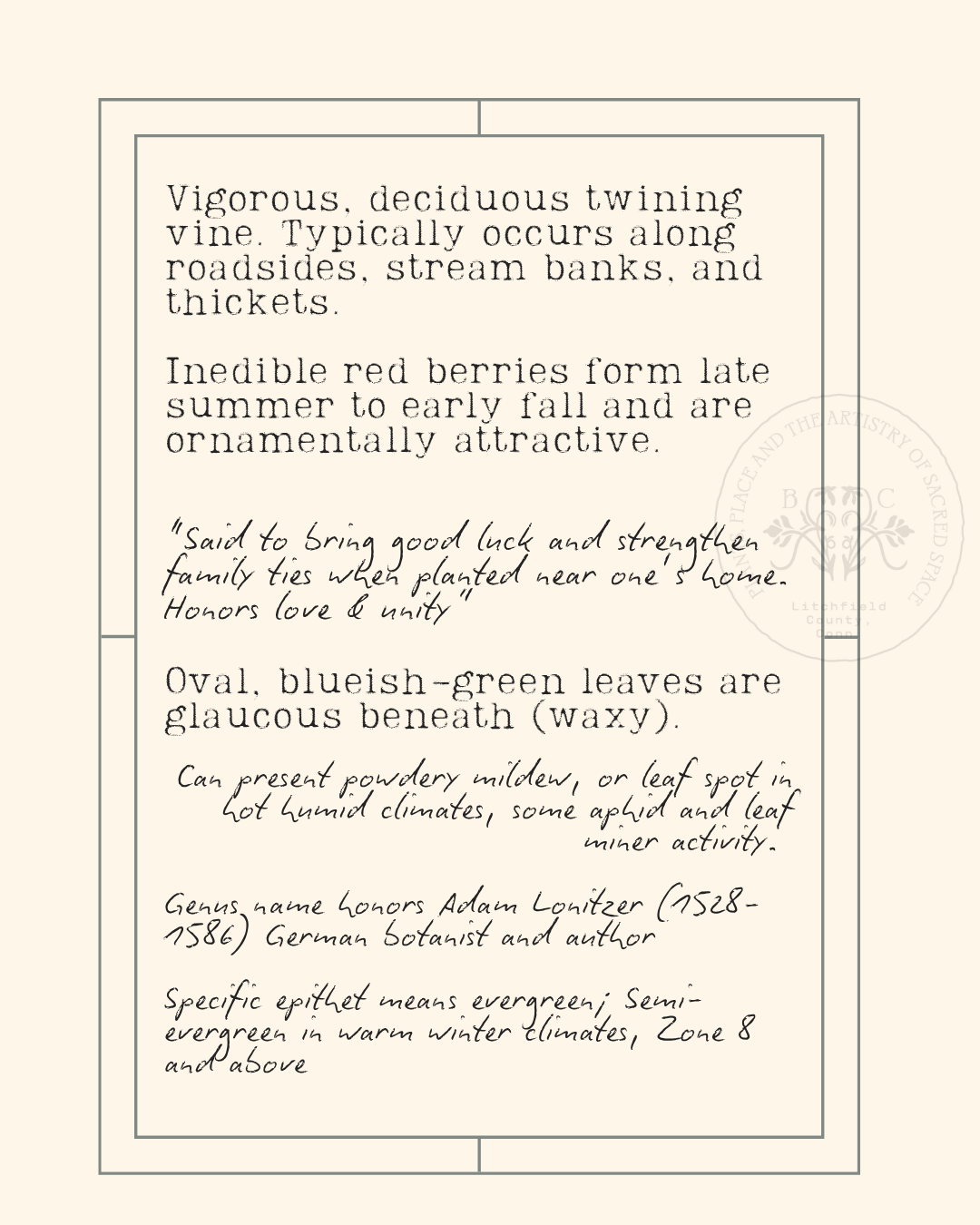
One of the loveliest things about trumpet honeysuckle is the life it invites in. Hummingbirds find it almost immediately, drawn to the narrow red flowers, while butterflies and native bees move quietly through the blooms throughout the season. By late summer, small red berries begin to appear, offering another layer of interest and food for birds heading into autumn.
Unlike some of its more aggressive relatives, this native honeysuckle feels balanced in the landscape. Vigorous, yes—but not overwhelming. It rambles rather than smothers. It belongs beautifully in gardens that value softness, habitat, and a sense of place.
There are very few serious issues to worry about, though humid summers can occasionally bring powdery mildew or leaf spot, and aphids may make an appearance now and then. Still, it remains one of the easier flowering vines to grow—resilient, generous, and full of movement.
The genus name honors botanist Adam Lonitzer, while sempervirens translates loosely to “evergreen,” a quiet nod to its persistence through milder winters. But more than anything, this is a plant that feels deeply tied to memory: old garden gates draped in bloom, the sound of hummingbird wings in summer heat, the slow softening of a fence line over time.