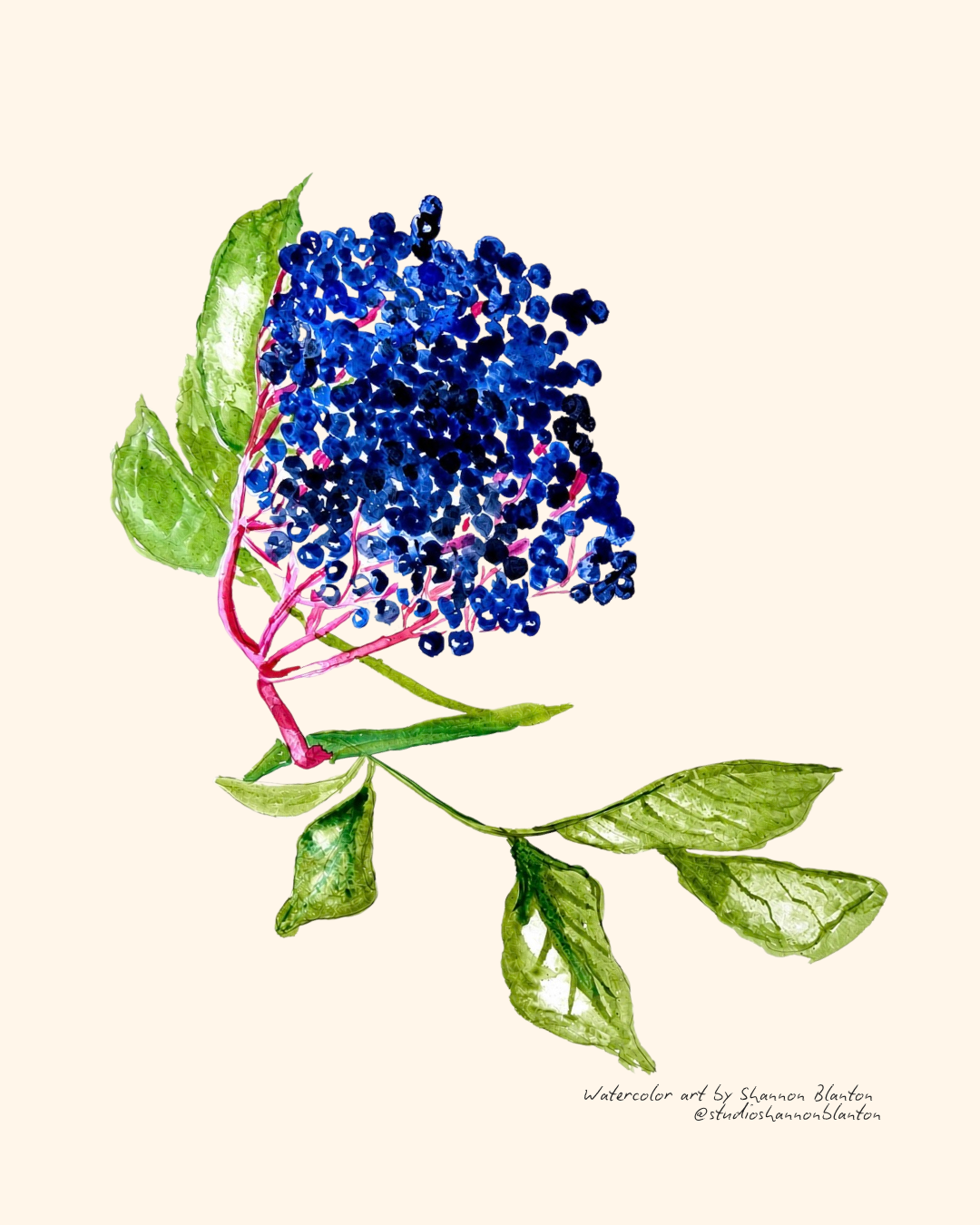
Sambucus canadensis
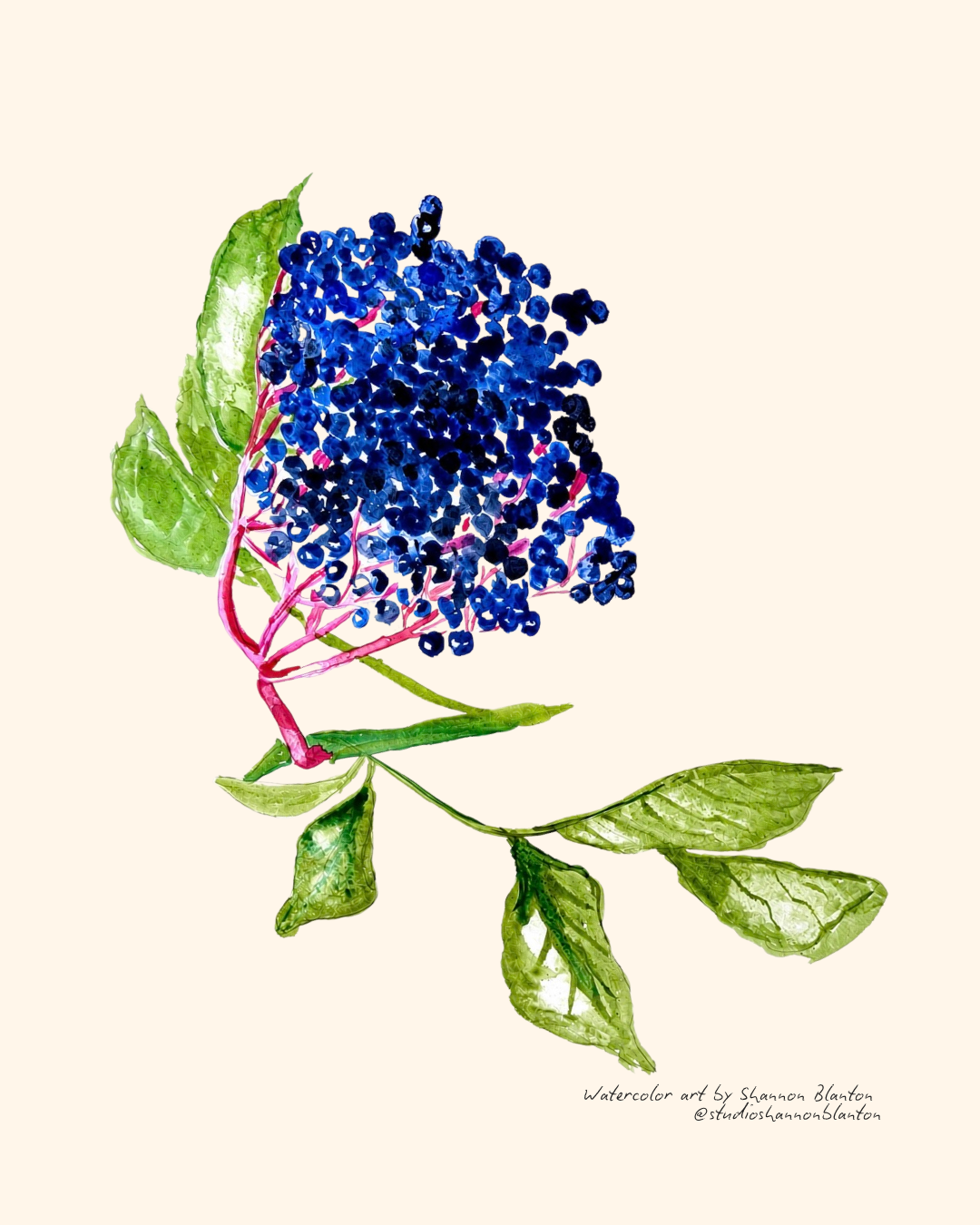
American Elderberry
‘Plants of Place’
A FIELD GUIDE
American elderberry, native to eastern North America, is a generous, somewhat unruly shrub found along streambanks, at the edges of woods, in thickets, fence rows, and roadsides—places where the wild and cultivated worlds meet.
In June, its branches are covered in broad, flat clusters of small, lemon-scented white flowers, followed in late summer by heavy clusters of dark berries, gathered by birds and wildlife and, with proper preparation, made into jams, jellies, and elderberry wine.
Elder has long carried a little magic with it.
In European folklore, the tree was believed to be home to the Elder Mother, a protective spirit who might offer blessing or misfortune depending on the respect shown to the tree. It was said to turn away negative energy and evil spirits while inviting good fortune in their place. Even its name carries an old-world echo—the genus Sambucus may be connected to the sambuca, an ancient harp-like instrument, while canadensis simply means “of Canada.”
In the garden, elderberry is equally generous, growing happily in sun or part shade and tolerating a wide range of soils, particularly those that remain moist.
It spreads by suckering roots, making colonies when given room to wander, or can be kept more contained by removing unwanted suckers. A hard pruning in spring encourages fresh, vigorous growth and helps maintain a fuller, more graceful form.
Elder is not a particularly tidy plant, nor does it seem interested in being one—and perhaps that is part of its charm. It belongs at the edges, where gardens soften into wild places, offering flowers, fruit, shelter, and a little bit of folklore along the way.