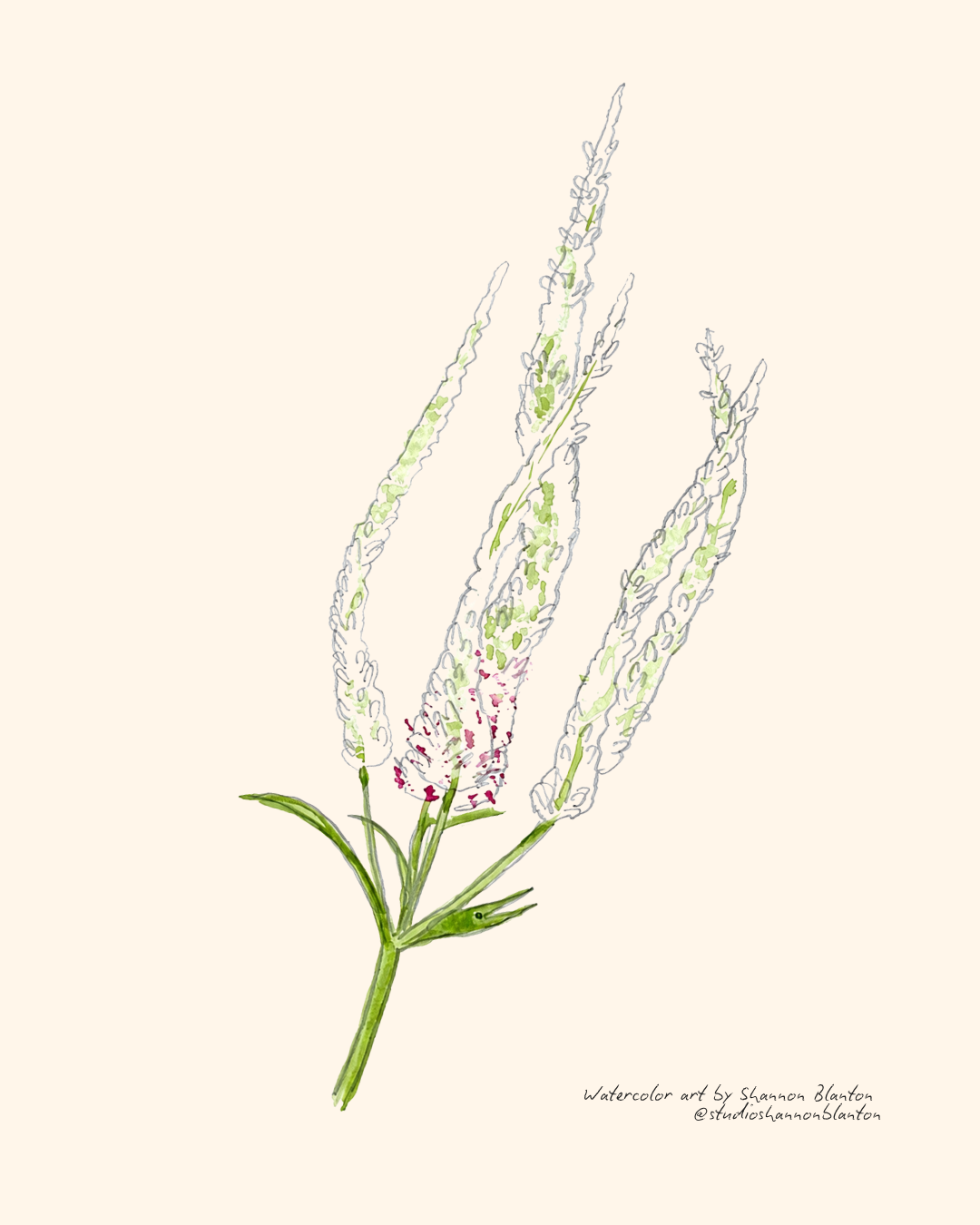
Culver’s Root
‘Plants of Place’
A FIELD GUIDE
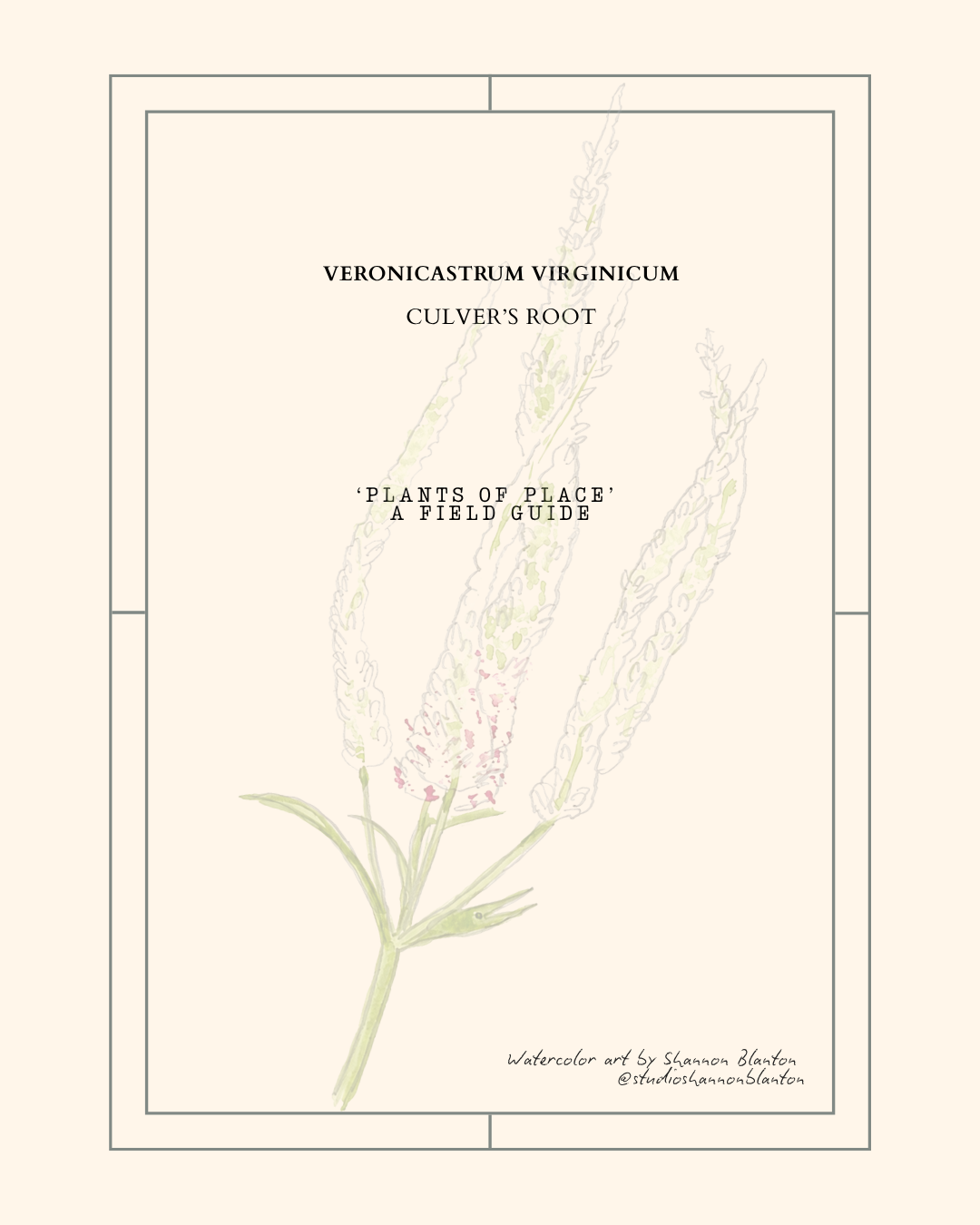
Culver’s Root
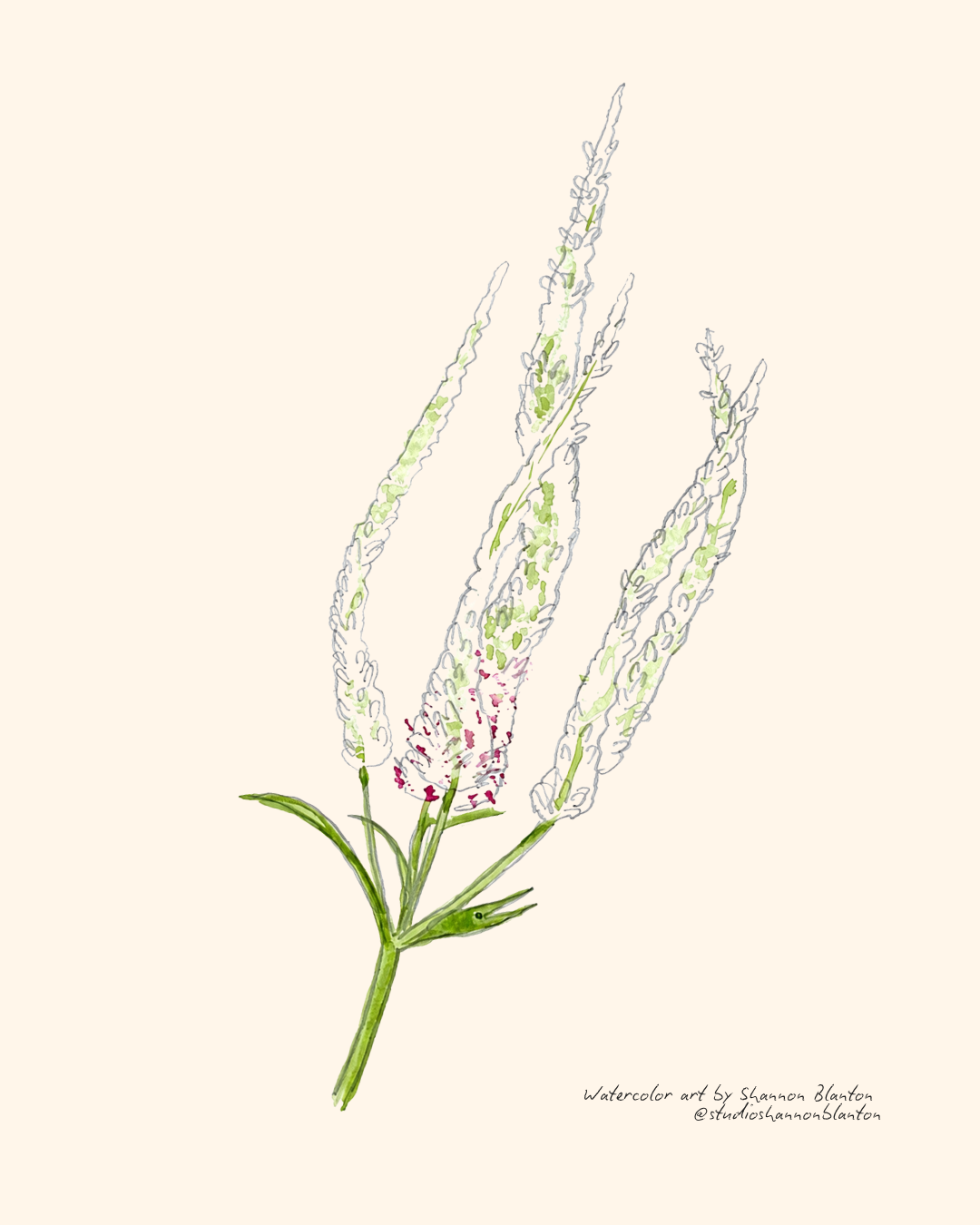
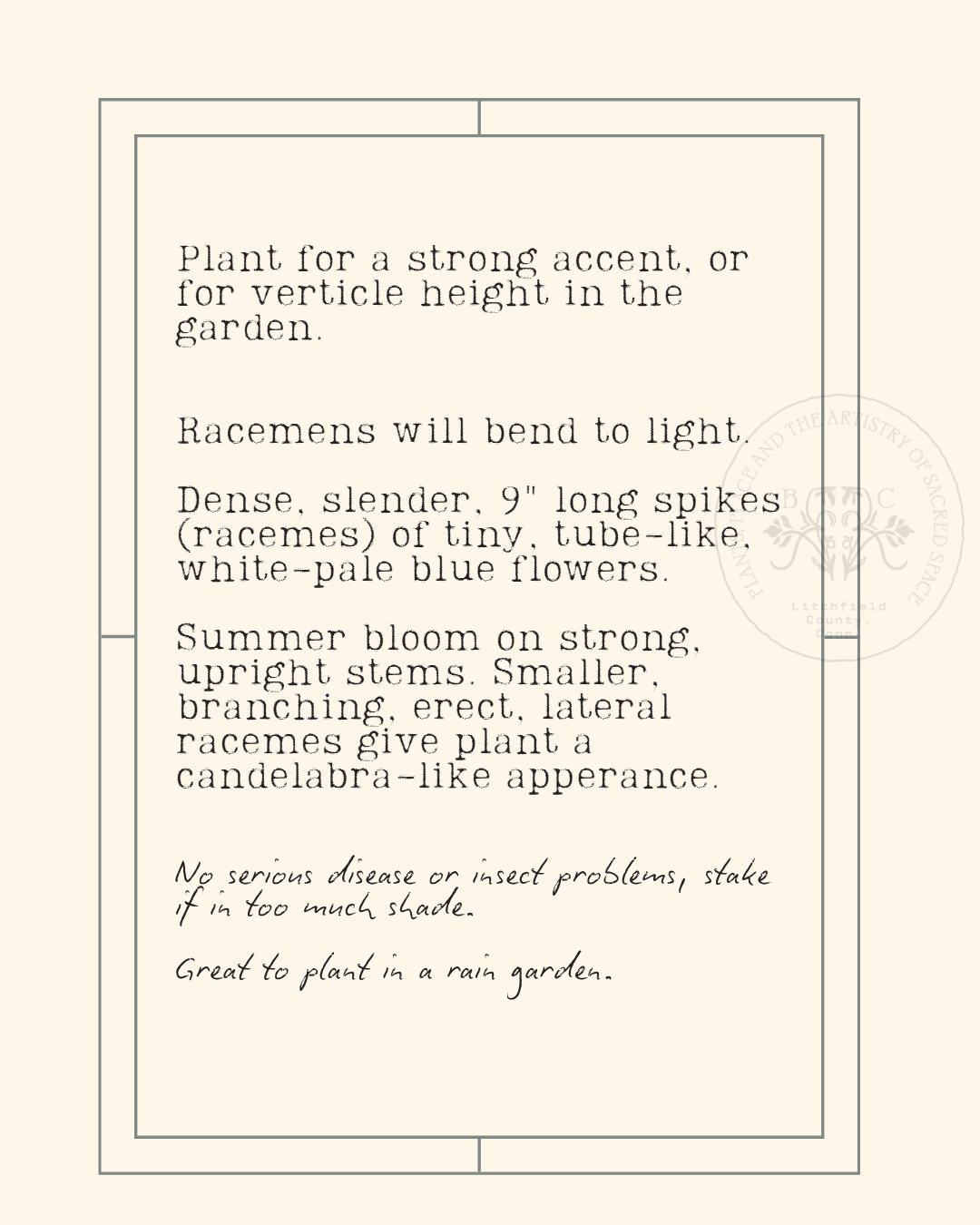
There is something quietly striking about Culver’s Root (Veronicastrum virginicum). Tall, upright stems and delicate, candelabra-like flower spikes, this native perennial brings both structure and softness to the summer garden.
Reaching heights of 3–7 feet when in bloom, Culver’s Root makes a beautiful statement planted among other meadow-inspired perennials, where its slender white to pale blue flowers rise above the surrounding foliage. Its lance-shaped leaves grow in whorls around the stem, giving the plant an architectural quality that adds interest even before flowering.
Growing Culver’s Root
Culver’s Root thrives in full sun and average, medium to wet, well-drained soil. Consistent moisture is important, and the soil should not be allowed to dry out. While it tolerates light shade, too much shade can cause the tall stems to flop and may require additional support.
This is a plant that rewards patience. Culver’s Root can take several years to establish itself in the garden, but once settled, it becomes a graceful and dependable presence.
To encourage continued flowering, deadhead spent flower spikes throughout the summer. After flowering, cutting the plant back to its basal growth can encourage fresh foliage and may even inspire a late summer or fall rebloom.
A Plant with Presence
One of the qualities I love about Culver’s Root is its ability to bring height and movement to a planting without feeling overly formal. Its upright flower spikes create a sense of rhythm, while its delicate blooms soften the overall composition.
It is a wonderful choice for a garden inspired by the natural world—particularly meadow plantings, perennial borders, and spaces where native plants can flourish.
Like so many plants we welcome into our gardens, Culver’s Root offers more than a moment of bloom. It becomes part of the living system of the garden, returning year after year and contributing its own quiet beauty to the landscape.