

First Movement
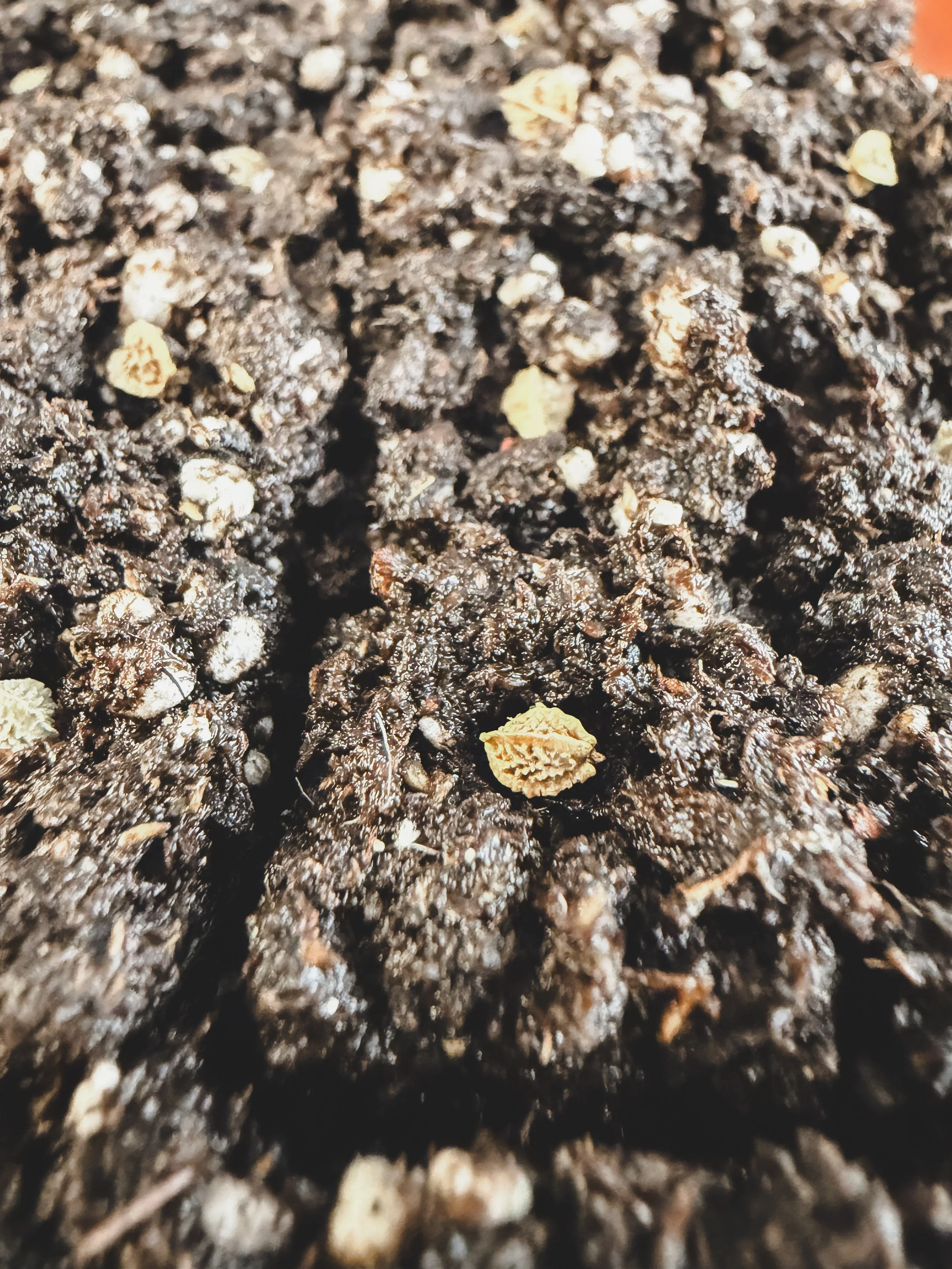
The New Year arrives with crisp air and a blanket of bright white. While new growth is hidden from immediate view, the potential of the coming season is palpable, rooted in memory. The promise of spring can be found in the pages of seed catalogs or glimpsed in the vigor of indoor plants reaching for sunnier windows and longer daylight. The hands-on work is minimal now: washing and preparing seed trays, having already divided and stored the dahlia tubers.
Soon, though, seed packs will be opened, and dahlias will be nestled into fresh soil, awaiting new shoots that will be carefully cut and rooted to multiply the stock. A mix of anticipation and excitement is settling in.
Until then, we observe the garden through a bright, white haze. The seedheads and stalks of dormant perennials remain, alongside the bare branches of shrubs. The soft snowfall leaves delicate outlines, hinting at the life held just beneath the surface. Trees stand resiliently, their bark defining their structure, a testament to a fascinating process: building layer upon layer of protection from death, relying on the vital inner core for life.
What does the garden reveal in its dormant state?
Line. Form. Potential. A sense of absence.
The winter view allows for a reimagining of garden beds, without the sensory overload of color and texture that dominates from spring through fall. It offers a chance to appreciate indoor views, perhaps highlighting the uniform structure of a boxwood hedge or the vivid branches of a redtwig dogwood. The elegant, arching lines of a dappled Japanese willow, dressed with glistening, melting icicles, catch the eye. Small but significant elements—like birds feeding from the dried stalks of sedum and echinacea, or the possibility of a burst of fire-orange holly berries—elements often overlooked during the explosion of spring growth, now stand out. Do not undervalue the beauty of a winter garden view.
