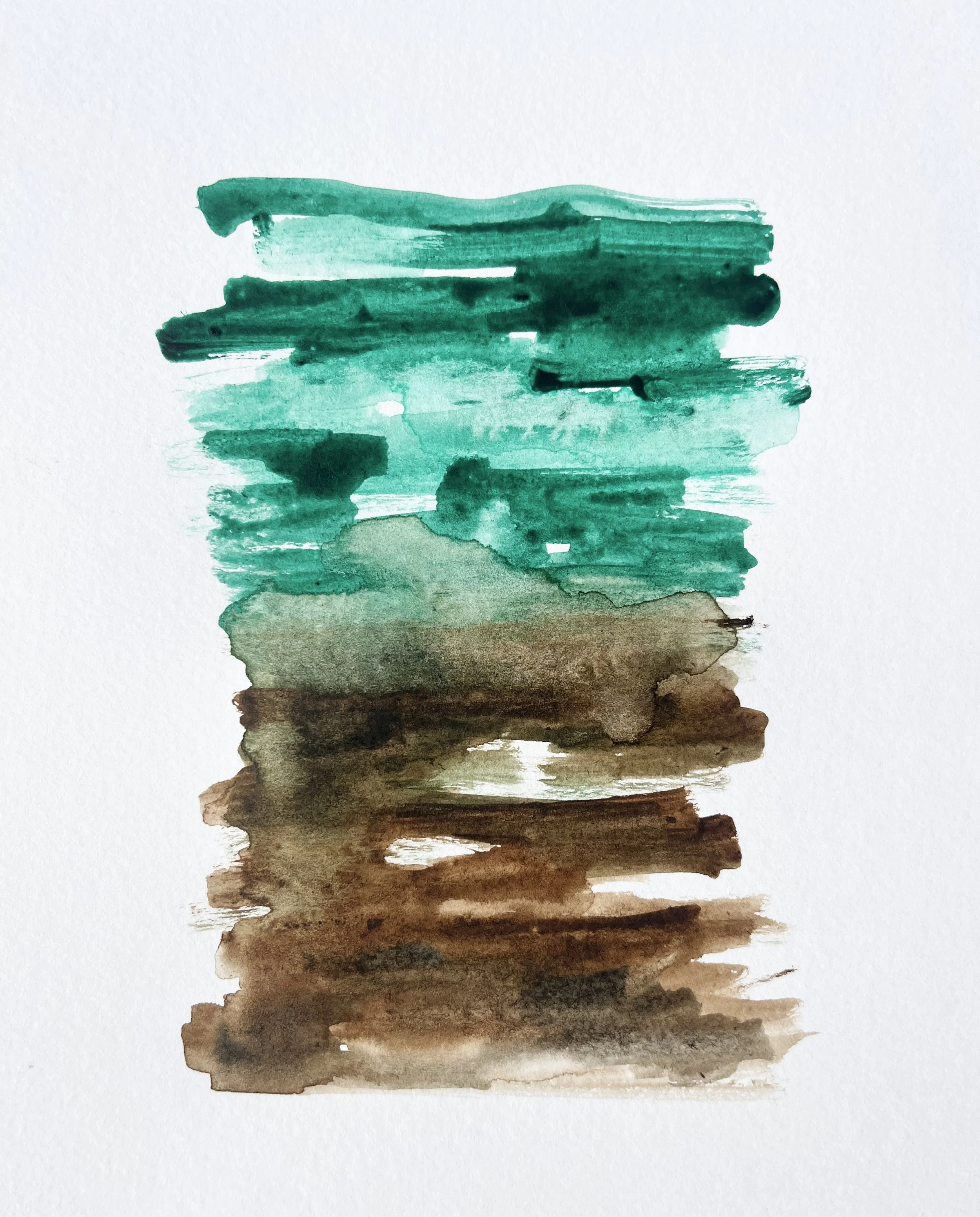
Color Study No. 1

Watercolor art by Shannon Blanton

Peach, Blue & Gold: A Spring Palette in Watercolor and Flowers

Seasonal design often begins with observation rather than materials. Before flowers are gathered or arrangements composed, color itself can serve as the starting point. Watercolor offers a useful tool for this process, allowing tones to interact freely and revealing how hues balance long before they appear in the garden or vase.

This first color study explores a spring palette built around peach, blue, and gold — a combination that reflects the atmosphere of early spring, when warmth begins to return but the cool clarity of winter still lingers.

Reading the Season Through Color

Spring palettes tend to favor luminosity over saturation. Colors feel lighter, more transparent, shaped by shifting light and emerging growth.

  • Peach introduces gentle warmth, echoing unfolding blossoms and softened earth tones.

  • Blue provides contrast and airiness, reminiscent of open sky and cool mornings.

  • Gold functions as a unifying element, suggesting sunlight, pollen, and seasonal renewal.

Together, these tones create equilibrium — warm without heaviness, fresh without starkness.

From Paint to Arrangement

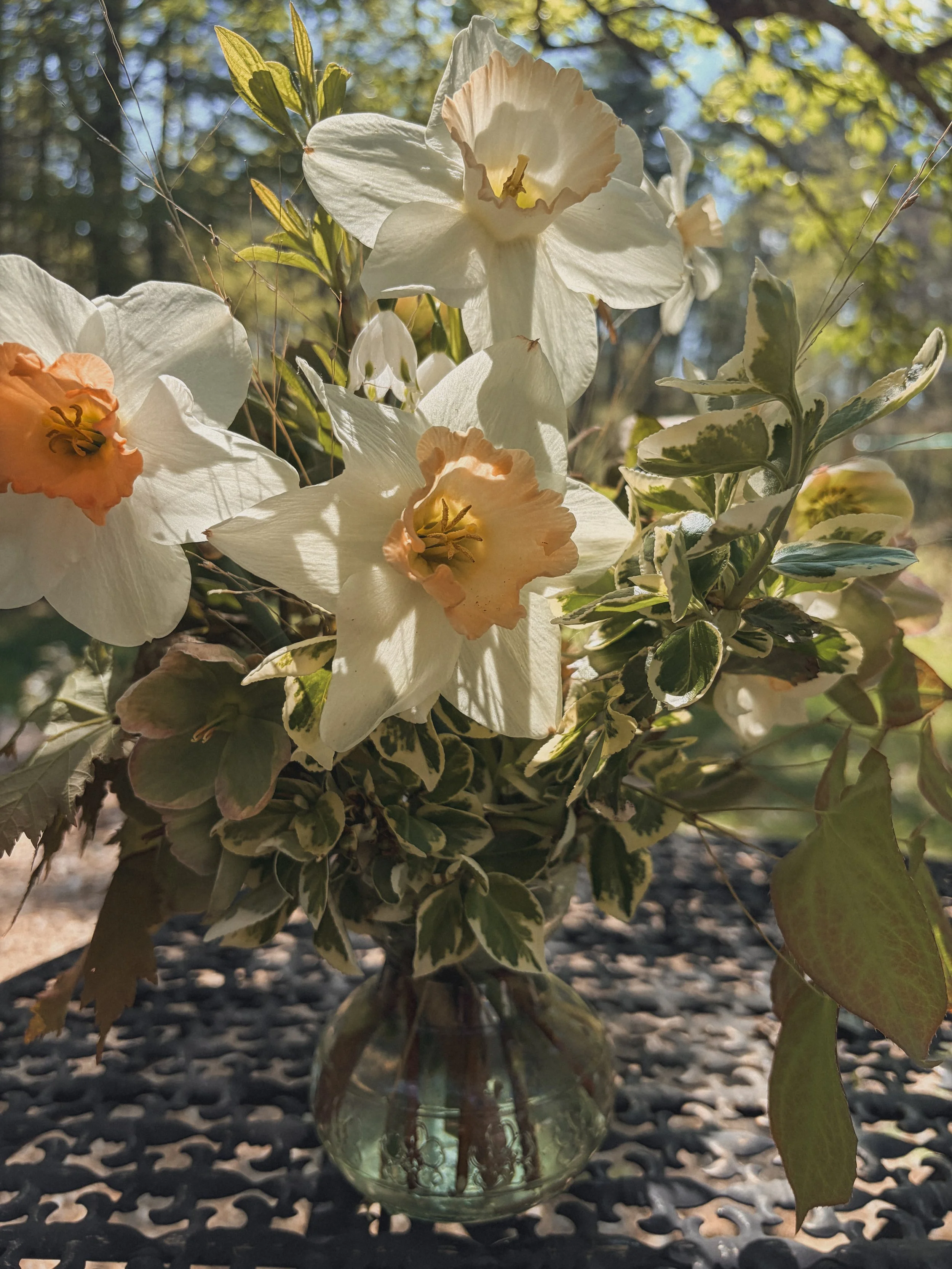
The watercolor study informed a floral composition using blooms that naturally express the palette while highlighting seasonal availability and structure.

Featured flowers included:

  • Peach hyacinth, chosen for its dense form and fragrance, anchoring the arrangement with concentrated color and early-spring character.

  • Tangerine tulips, contributing golden warmth and movement. Tulips continue to grow after cutting, subtly reshaping the composition over time.

  • Blue delphinium, adding vertical emphasis and cooling contrast. Its height introduces rhythm and guides the eye upward.

  • Peach alstroemeria, offering transitional tones and fine detailing that soften shifts between stronger colors.

  • Variegated pittosporum, selected as foliage for its cream-edged leaves, which provide neutrality and visual balance among brighter blooms.

Color Interaction in Practice

What distinguishes this palette is its balance of temperature. Peach and gold share warmth but differ in intensity, while blue introduces clarity and depth. When placed together, each color enhances the others rather than competing.

In watercolor, this relationship appears through layered washes and subtle blending. In floral design, it emerges through spacing, height variation, and texture — allowing colors to meet naturally rather than through strict symmetry.

The result feels cohesive yet relaxed, reflecting the irregular harmony found in seasonal landscapes.

Seasonal Context

This palette aligns closely with early to mid-spring gardens, a period defined by transition. Structural plants begin to reappear, bulbs provide concentrated color, and vertical elements hint at the abundance still to come.

Hyacinths mark the season’s arrival with scent and density. Tulips bring movement and warmth. Delphinium anticipates late-spring height, while fresh foliage restores green to the composition.

Together, they capture a moment when the garden shifts from dormancy toward growth.

Color as a Design Practice

Working between watercolor and floral design encourages a slower approach to composition. Painting allows experimentation with proportion and contrast before flowers are arranged, helping designers understand how color behaves under changing light and in different relationships.

Rather than selecting flowers individually, the process begins with atmosphere — asking what the season feels like, and then building a palette that reflects it.

Closing Notes

Peach, blue, and gold offer a versatile framework for spring arrangements, combining warmth, freshness, and light in equal measure. The palette reflects the season’s gradual unfolding — neither muted nor fully exuberant, but balanced in transition.

Studying color across mediums reveals an essential principle shared by gardens and art alike: successful compositions rely less on individual elements and more on the relationships between them.

This study marks the beginning of an ongoing seasonal exploration, where watercolor and flowers work together to interpret the evolving language of the garden.

Next
Next

American Witch Hazel