

What does the garden require at its fullest?
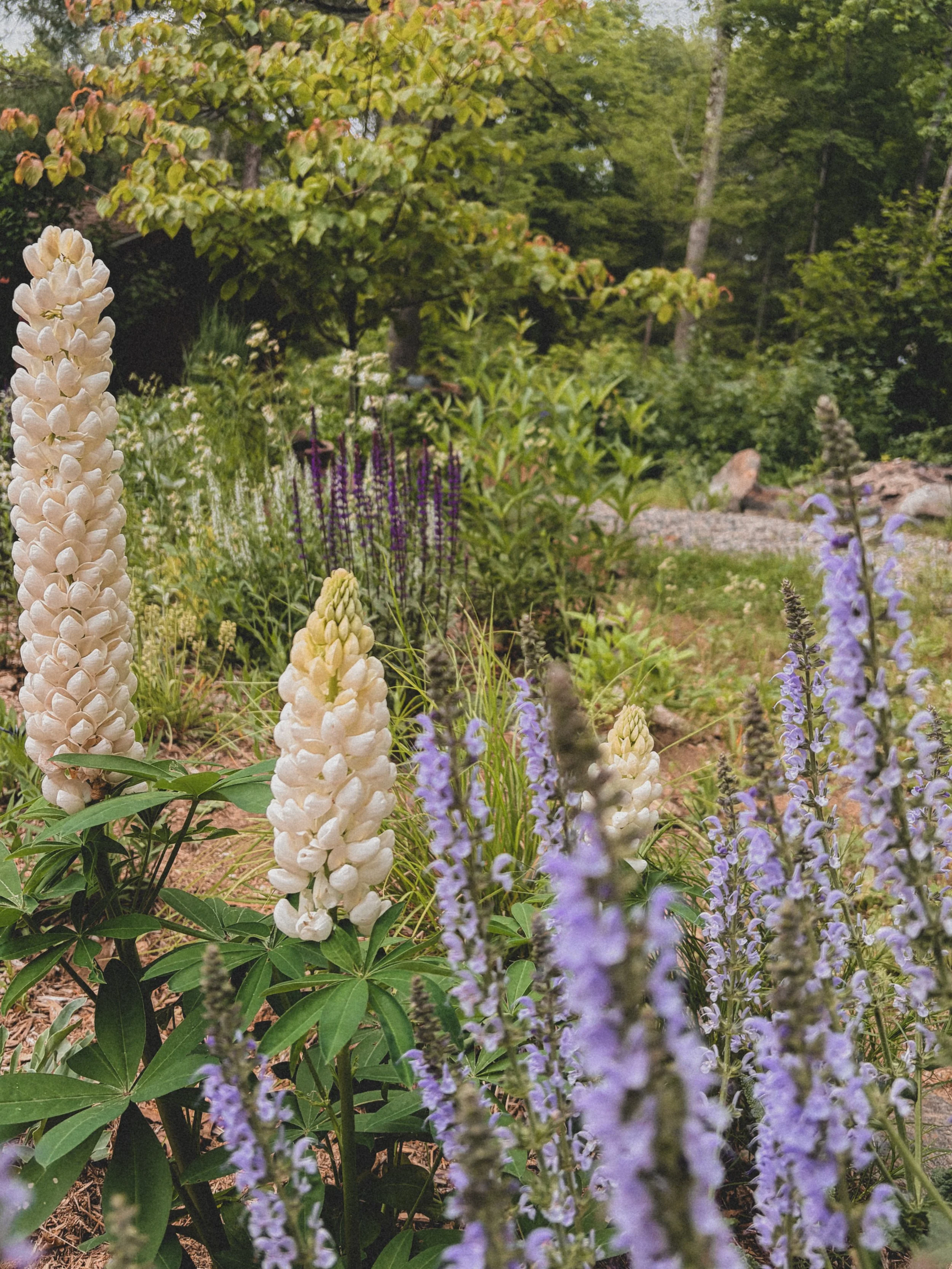
Like clockwork, we drag the hoses to the furthest reaches of the property. Snagged and kinked along the way, I move through the familiar sighs and frustrations that come with keeping plants alive. I water and soak each planting hole again and again, ensuring that newly expanding roots find ease as they reach outward into the soil. Five-gallon buckets in hand, we side-step slowly, water filling our boots as we go. Calculated nourishment for trees, delivered in place of the ever-absent rain.
It is only a brief moment in time before we walk past these same trees and shrubs and remember the sweat, the hours spent roasting in the sun, watering on repeat like clockwork every four or so days. Water slowly, deeply, and less frequently—this becomes both instruction and mantra.
Perennials now boast their blooms, competing for attention, or perhaps working in cohesion and complement. It is never entirely easy to tell. Penstemon, planted seasons ago, is now partially smothered by an overly expressive Deutzia and asks, quietly, for rebalancing. Without the plum foliage of the penstemon, the small wine ninebark stands more starkly on her own.
Peony heads flop and arch over their cages. Do you want to be supported? I often ask whether this assistance is for them or for us. Did they not evolve with their own preferred architecture, their own way of meeting the world? And yet, nothing feels more orderly, more resolved, than perfectly staked tomatoes and trellised peas in a garden.
We keep up with the weeds as the 90-degree days begin to settle in. Deadheading becomes a weekly ritual—removing what is no longer and making space for what is next to emerge. We observe, we listen, we respond.
